Testicular Sperm Aspiration (TESA)
TESA is a minimally invasive procedure that collects sperm directly from testicular tissue using a fine needle, ideal for men with obstructive azoospermia [web:6][web:9].
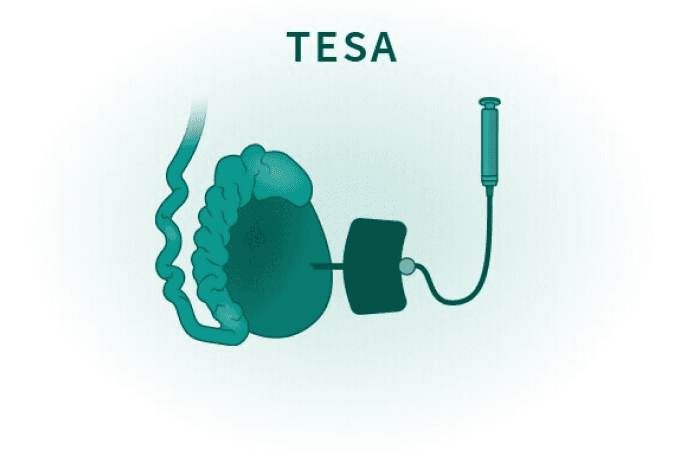
What is TESA?
TESA (Testicular Sperm Aspiration) is a procedure where a fine needle is inserted directly into the testis to aspirate tissue and sperm [web:6][web:9]. Unlike PESA which retrieves from the epididymis, TESA collects sperm directly from the source where they are produced.
The procedure is performed under local anesthesia in an operating room or office setting and takes approximately 10-15 minutes [web:6][web:9]. TESA is typically timed to coincide with the female partner's egg retrieval [web:9].
When is TESA Recommended?
TESA is beneficial for men with:
- Obstructive azoospermia, especially after vasectomy [web:9]
- Failed vasectomy reversal
- Congenital absence of vas deferens
- Epididymal blockages
- When PESA doesn't yield adequate sperm
If TESA fails to provide adequate tissue or sperm, an open testicular biopsy or micro-TESE may be required [web:9].
TESA Procedure Steps
- Local anesthesia: The scrotal area is numbed with local anesthetic
- Needle insertion: A fine needle is inserted through the scrotal skin directly into the testis [web:9]
- Tissue aspiration: Testicular tissue and sperm are aspirated through the needle [web:9]
- Laboratory examination: Tissue is examined under microscope for sperm
- Sperm preparation: Retrieved sperm are processed for ICSI fertilization
- ICSI procedure: Selected sperm are injected into eggs
Advantages of TESA
- Minimally invasive - no surgical incision required
- Performed under local anesthesia [web:6][web:9]
- Quick procedure (10-15 minutes) [web:6]
- Lower cost compared to microsurgical techniques
- Retrieves sperm directly from production source
- Effective for obstructive azoospermia [web:9]
- Quick recovery time
- Can be repeated if necessary
Recovery and Potential Risks
Recovery from TESA is typically straightforward. Most men experience:
- Mild scrotal discomfort for 2-3 days
- Minor bruising or swelling
- Minimal activity restriction (avoid heavy lifting for 1 week)
Potential risks include:
- Scrotal hematoma (blood collection - rare)
- Infection (very rare)
- Temporary testicular discomfort
Pain medication and ice packs help manage any post-procedure discomfort.
TESA vs Other Sperm Retrieval Methods
- TESA vs PESA: TESA retrieves from testis; PESA from epididymis
- TESA vs MESA: TESA uses needle aspiration; MESA requires surgical incision
- TESA vs Micro-TESE: TESA is simpler needle aspiration; Micro-TESE uses surgical microscope for difficult cases
- When to choose TESA: Obstructive azoospermia with normal sperm production
Why Choose DAARA Hospital for TESA?
- Experienced urologists specializing in male infertility
- Advanced andrology laboratory for sperm processing
- High-quality ICSI services for optimal fertilization
- Comfortable procedure rooms with modern equipment
- Comprehensive pre- and post-procedure care
Book your consultation today to discuss if TESA is the right sperm retrieval option for your situation.
FAQs
Is TESA painful?
TESA is performed under local anesthesia, so you won't feel pain during the procedure. Some mild discomfort may occur afterward, which is manageable with pain medication.
How successful is TESA for sperm retrieval?
TESA has high success rates for sperm retrieval in men with obstructive azoospermia (typically 80-90%). Success depends on sperm production levels in the testes.
Can TESA be performed multiple times?
Yes, TESA can be repeated if needed. However, if multiple attempts fail, your doctor may recommend Micro-TESE or MESA for better sperm retrieval.
When will I know if sperm were successfully retrieved?
The embryology lab examines the aspirated tissue immediately under a microscope. You'll typically know within 30-60 minutes if viable sperm were found.